Puja Items Needed at Home: A Simple Checklist for Daily Puja
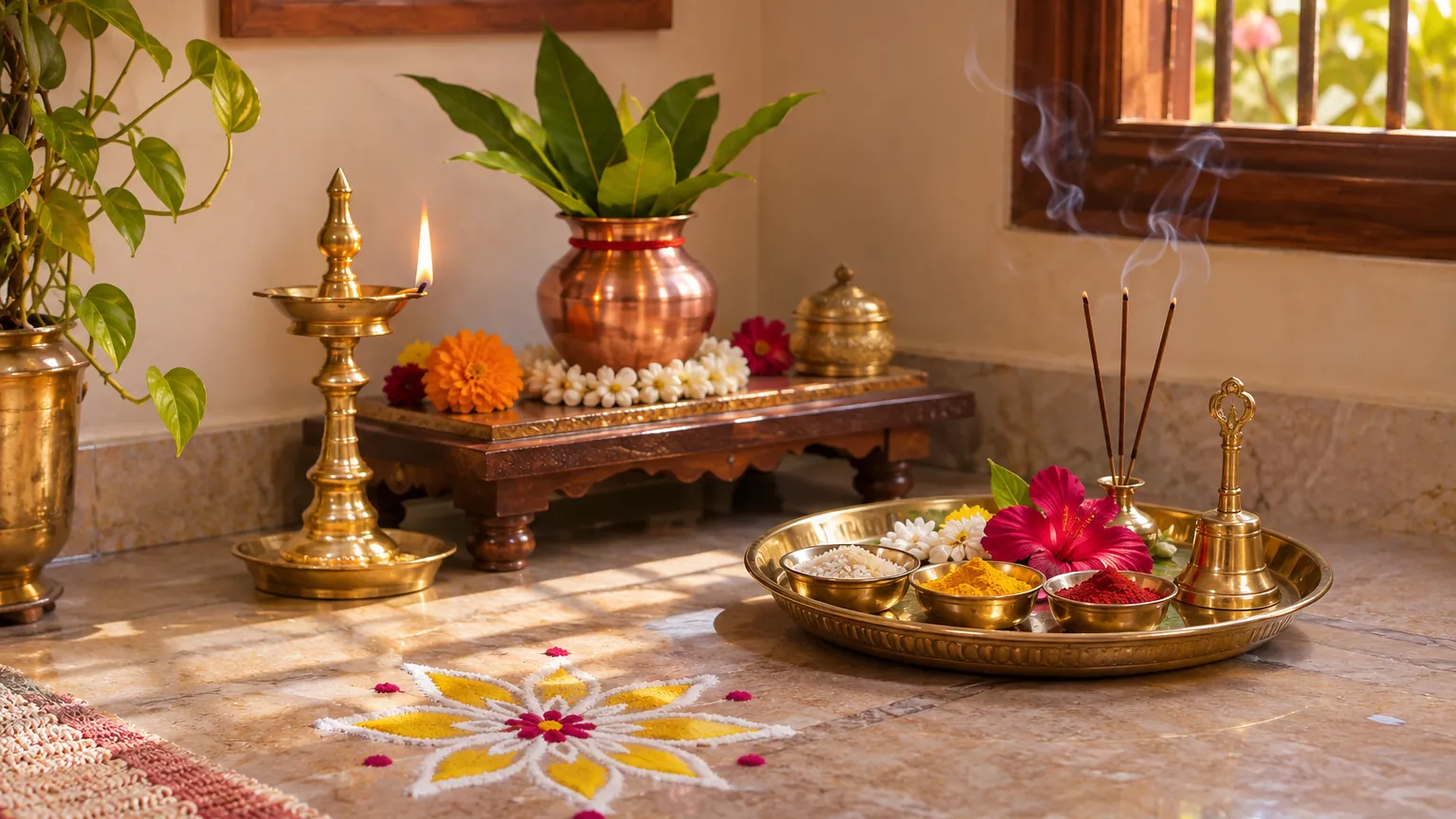
Table of contents
Puja at home does not need a large collection of items or a complicated setup. For a simple daily puja, keep a clean space, a diya, water, flowers or leaves when available, and a small offering; sincerity and regularity matter more than having everything.
This guide lists the common puja items needed at home, shows how to arrange them, and gives an easy order for daily prayer. If your family follows a particular tradition, use that as your guide and ask a knowledgeable elder or pandit about any custom you are unsure of.
Start with a clean, simple prayer space
Choose a small shelf, table or corner that can stay clean and calm. Many families use a cloth, a lamp and a few regular items in one basket or tray. The goal is not to create a perfect display; it is to make daily prayer easy to begin.
Before starting, wash your hands and clear away used flowers, old offerings and ash from the previous day. If you cannot do this every day, do it whenever you are able. A neat space makes it easier to sit for a few quiet minutes.
Basic puja items for most homes
- A diya or small lamp, with a wick and oil or ghee
- A matchbox or lighter to light the diya safely
- Clean water in a cup, lota or small kalash
- Turmeric, kumkum and a small quantity of rice
- Fresh flowers, leaves or a simple garland when available
- Incense sticks, dhoop or camphor if your family uses them
- A bell, if you have one
- A small plate or thali for offerings
- Fruit, cooked food or a little sugar/jaggery as naivedyam when suitable
- A clean cloth, tissue or bowl for keeping the area tidy
You do not have to buy every item at once. Start with what is already clean and available at home. For commonly used supplies, you can also browse puja items for a home altar when you need to replenish them.
How to arrange puja samagri
Place the diya where it is steady and away from curtains, paper and children’s reach. Keep water, rice, turmeric and kumkum on the thali or beside it. Put flowers in a small bowl or plate so the area remains clean. Keep the offering covered until the time you offer it.
It helps to keep the items in the same place each day. This saves time in the morning and makes a short puja more likely to become a comfortable habit.
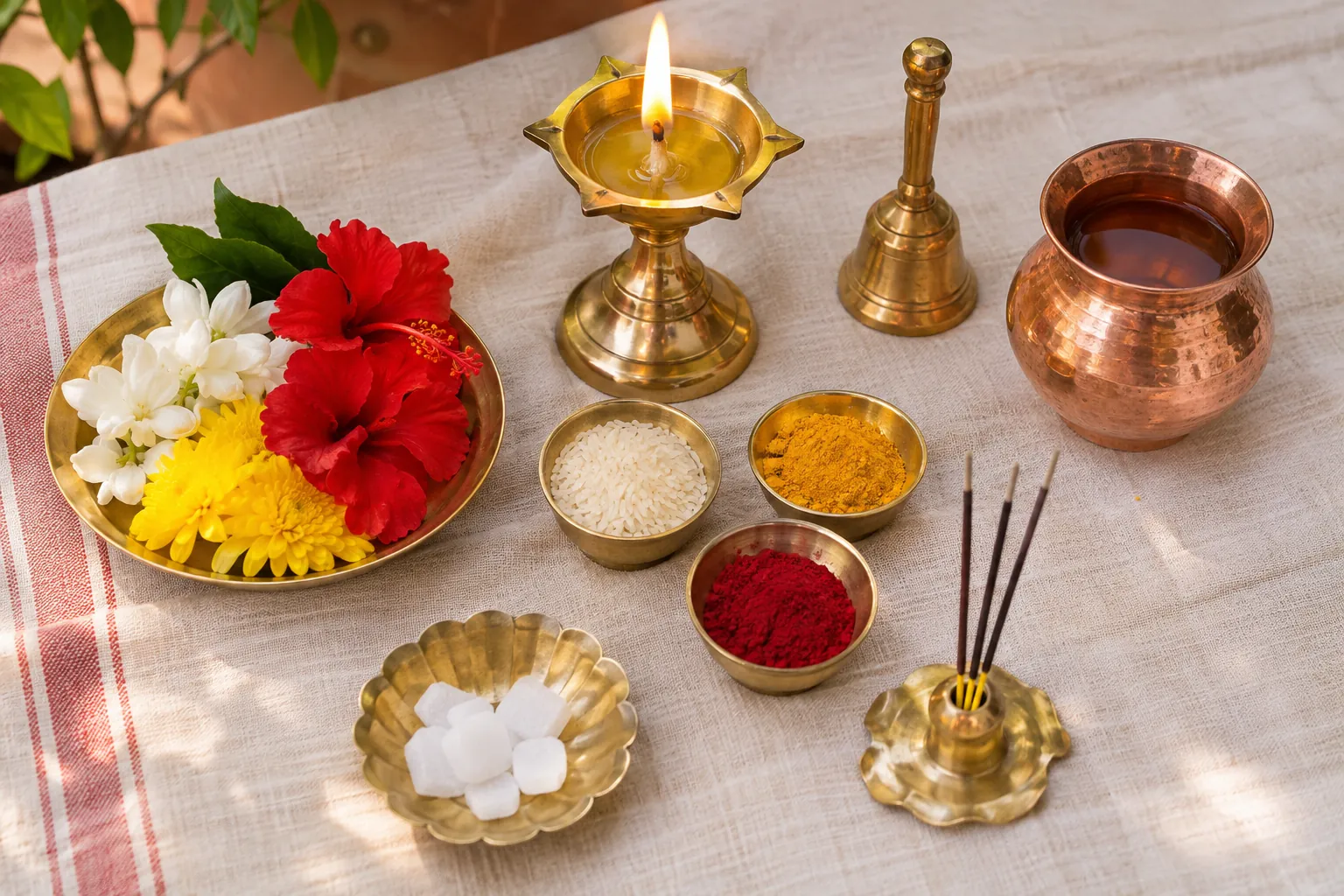
Keep the items clean, simple and easy to reach.
A simple daily puja order
There is no need to rush through a long procedure when time is short. A simple puja at home can be done with a respectful, steady routine. Families may add their own prayers, stotras or practices.
- Clean the prayer space and wash your hands.
- Light the diya safely and sit quietly for a moment.
- Offer water mentally or in the way your family follows.
- Apply a little turmeric, kumkum and rice where appropriate in your tradition.
- Offer flowers or leaves, then incense or dhoop if used.
- Offer naivedyam such as fruit or a small prepared item.
- Say a short prayer, chant a familiar mantra, or read a small portion of a stotra.
- End with gratitude and share the offering respectfully.
Tip: A five-minute puja done calmly is more practical than collecting many items and feeling pressured. Keep a small daily set ready, then expand only for festivals or a family ceremony.
Quick checklist for daily puja at home
Use this list before you begin. Cross off items mentally rather than worrying about things that are unavailable that day.
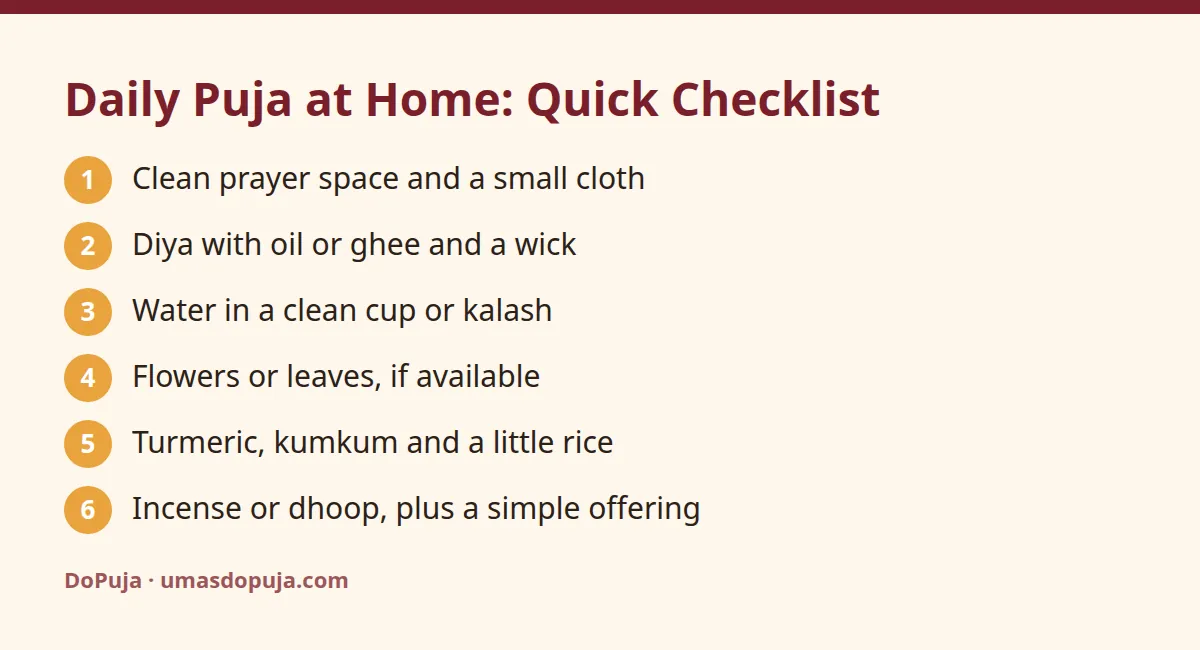
| Item | Why it is useful | Simple alternative |
|---|---|---|
| Diya, wick and oil/ghee | For lighting the lamp | Use a clean small lamp you already have |
| Water | Part of a respectful offering in many home practices | A clean cup of water |
| Flowers or leaves | A simple offering | Offer what is fresh and appropriate locally |
| Turmeric, kumkum and rice | Common home-puja materials | Keep small containers; use according to family custom |
| Naivedyam | An offering before sharing food | Fruit or a small homemade item |
What to keep for a longer puja or festival
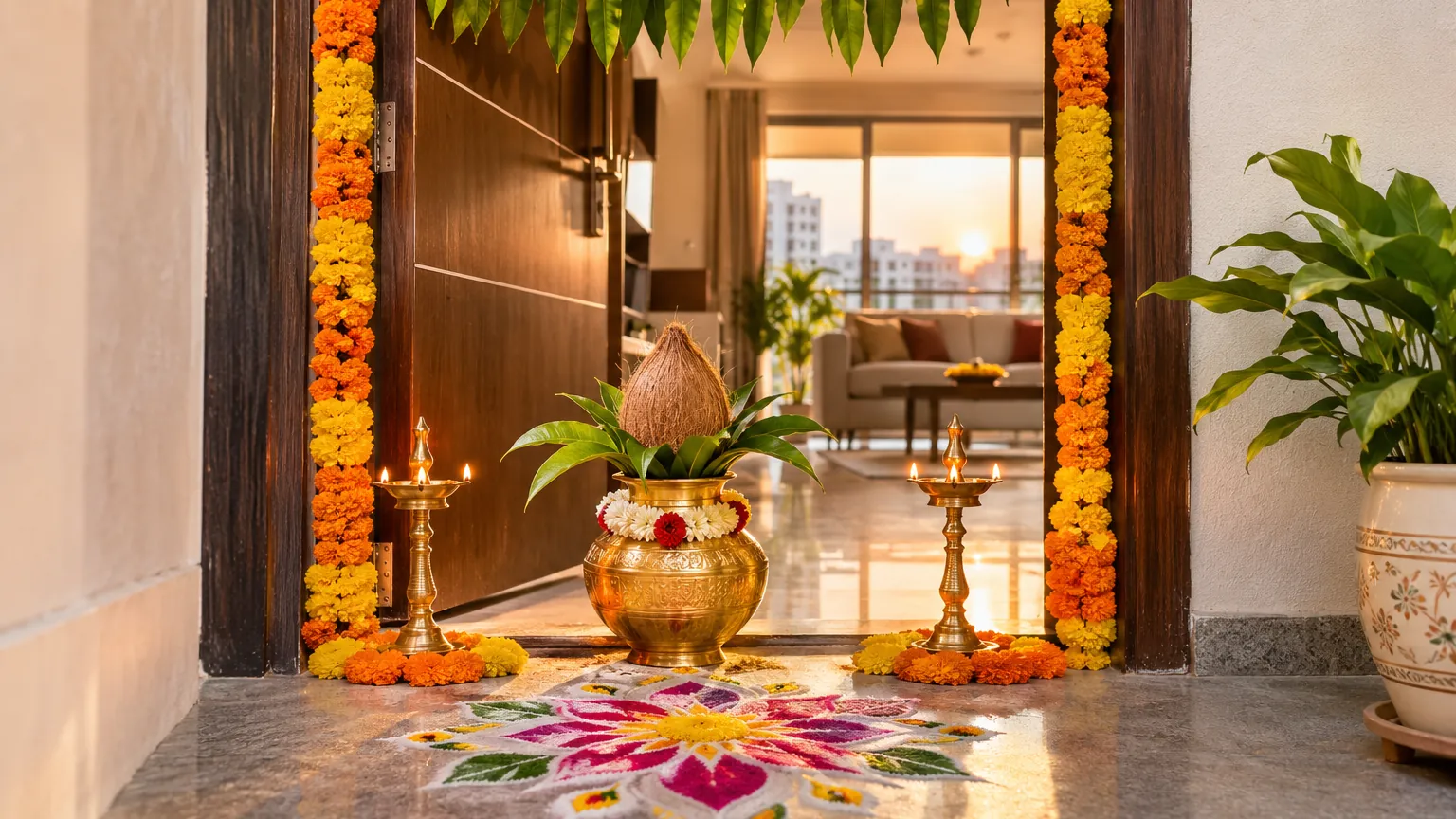
A festival, vratam, house ceremony or special family puja may require additional samagri. The exact list can vary by the puja, region and family tradition. A pandit may ask for items such as a kalash, coconut, mango leaves, betel leaves, betel nuts, sacred thread, fruits, specific flowers, grains or a havan setup.
Do not assume one online list fits every ceremony. For a guided home ritual, first read the practical how to do puja at home guide, then confirm the ceremony-specific list with the person conducting it. For occasions that need a priest, you can book a pandit and discuss your family’s language, custom, date and required materials in advance.
Common mistakes to avoid
- Buying many items before knowing whether your family actually uses them.
- Leaving a lit lamp unattended or near fabric and paper.
- Letting old flowers and leftover offerings pile up in the prayer space.
- Feeling that daily puja is not possible unless every item is present.
- Copying a festival procedure for a short everyday prayer without adapting it to your time and home.
A regular, manageable routine is usually the best place to start. You can learn more about a home routine in our related daily puja at home guide.
FAQ
What are the minimum items for puja at home?
A clean space, a diya with a wick and oil or ghee, clean water and a simple offering are enough for many families. Flowers, turmeric, kumkum, rice and incense can be added according to availability and custom.
Can I do puja at home without flowers?
Yes. Use what is clean and available, and follow your family practice. Do not delay a simple prayer only because flowers are unavailable.
Should I keep a separate thali for puja items?
A separate thali or basket is useful because it keeps the everyday items together and clean, but it is not a requirement. A clean plate set aside for the purpose also works.
When should I ask a pandit for a puja items list?
Ask before a special puja, vratam, homam, griha pravesh or ceremony where the materials and sequence depend on tradition. Share the date, place and family custom while booking.
Start today with a small, clean set of essentials and a short routine. When you are planning a special ceremony at home, book a verified pandit through DoPuja and get a puja-specific preparation list.
Recommended articles
 DoPuja services
Why Perform Puja on Your Birthday? Discover the Significance of These Hindu Rituals!
A birthday is more than just cakes and celebrations! Hindu traditions give special importance to birthday pujas such as Janma Nakshatra Puja, Ayushya Homam, and Ganapati Puja. Discover why these rituals are performed, how to perform a simple birthday puja at home, and how to explore pandit booking services through DoPuja.
 DoPuja services
Griha Pravesh Puja Checklist: Book a Pandit in Hyderabad
A practical griha pravesh puja checklist for families planning a housewarming and looking for a pandit in Hyderabad.
 DoPuja services
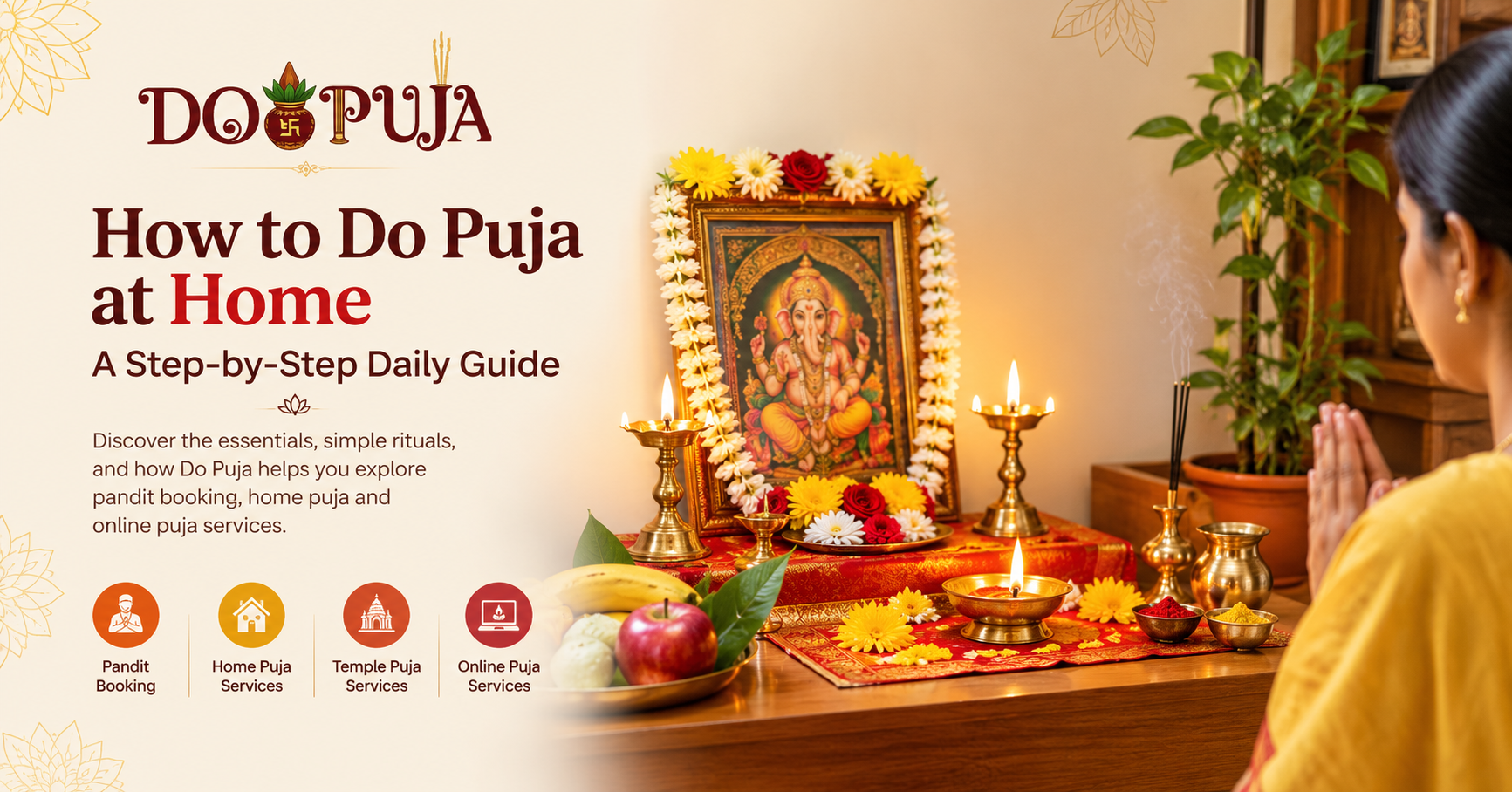
How to Do Puja at Home: Daily Guide | Do Puja
Learn how to do puja at home with this step-by-step daily guide. Discover essential puja items, simple worship rituals, and how the Do Puja app helps you explore pandit booking, home puja, and online puja services.
Comments
Be the first to comment.