Hindu Marriage Traditions and Important Wedding Rituals | DoPuja
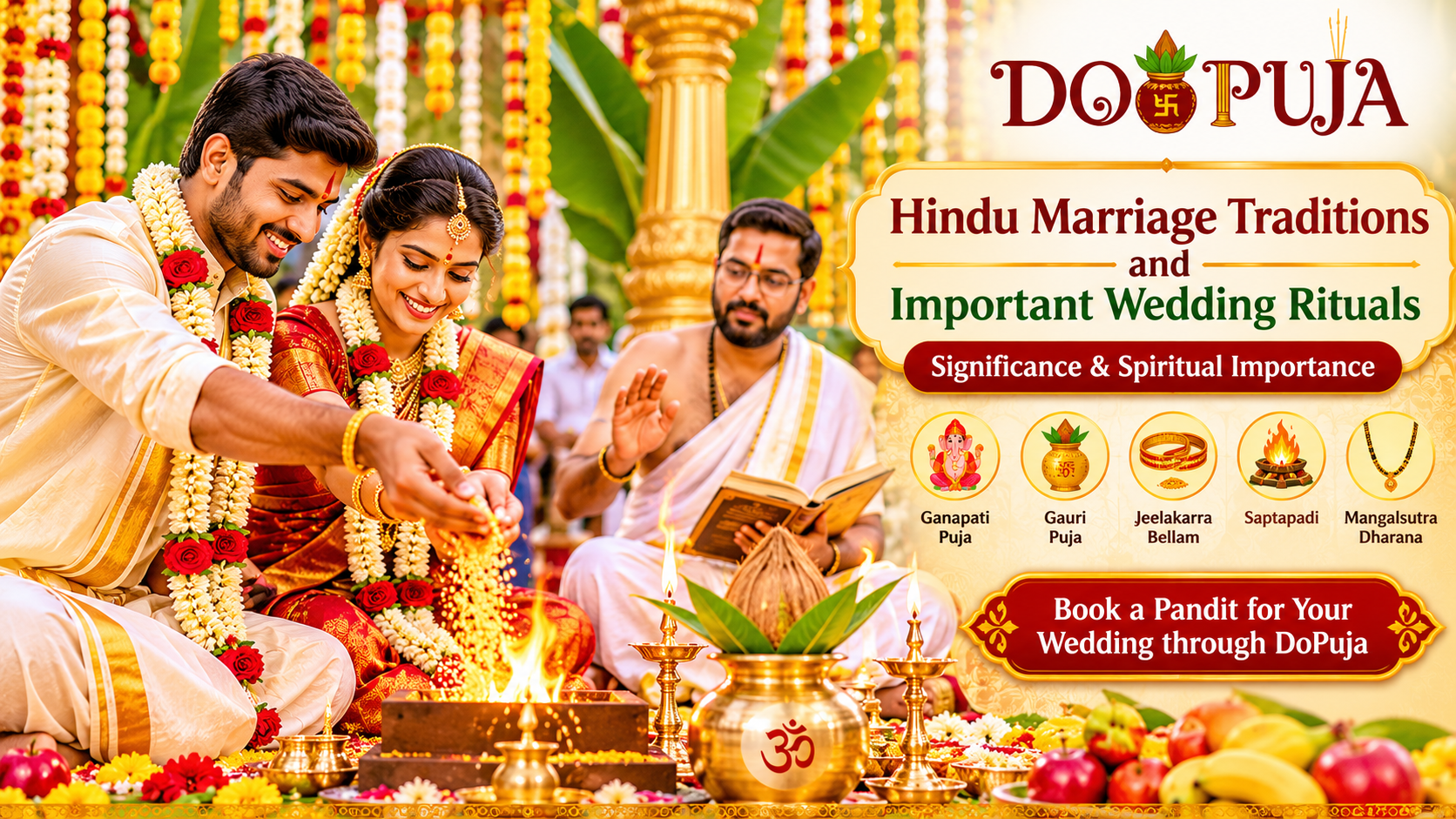
Table of contents
Hindu Marriage Traditions and the Significance of Important Wedding Rituals
Hindu weddings are not just celebrations that bring two individuals together; they represent the sacred union of two families, traditions, and values. Every Hindu wedding ritual has a spiritual meaning and symbolizes love, commitment, prosperity, and lifelong togetherness.
From Ganapati Puja and Gauri Puja to Jeelakarra Bellam, Mangalsutra Dharana, Talambralu, and Saptapadi, traditional Hindu marriage ceremonies include several meaningful rituals performed according to Vedic customs.
But have you ever wondered why these rituals are performed and what they actually represent?
In this blog, let's explore important Hindu marriage traditions, wedding pujas, their significance, and the role of a Vedic pandit in conducting a traditional wedding ceremony. We will also explain how DoPuja can help you explore convenient wedding pandit booking options.
What Is the Spiritual Significance of a Hindu Marriage?
In Hindu tradition, marriage is considered a sacred bond known as Vivaha Samskara. It is one of the important samskaras in a person's life and symbolizes the beginning of a shared journey based on mutual respect, responsibility, trust, and commitment.
A traditional Hindu wedding involves Vedic mantras, sacred fire rituals, blessings from elders, and prayers to deities for the couple's well-being.
The main purposes of Hindu wedding rituals include:
Seeking divine blessings for the newly married couple.
Praying for happiness, prosperity, and harmony.
Beginning married life with positive intentions.
Honouring family traditions and cultural values.
Strengthening the spiritual and emotional bond between the couple.
Important Hindu Wedding Pujas and Their Significance
Different Hindu communities follow different wedding customs. However, several important pujas are commonly performed before and during traditional Hindu marriages.
1. Ganapati Puja – Seeking Lord Ganesha's Blessings
Ganapati Puja is generally performed at the beginning of an auspicious ceremony. Lord Ganesha is worshipped as the remover of obstacles and the deity of new beginnings.
During a wedding, this puja is performed to seek blessings for the smooth completion of all marriage rituals and the couple's future life together.
2. Punyahavachanam – Purification Ritual
Punyahavachanam is a traditional purification ceremony performed to create an auspicious environment before important religious occasions.
Mantras are chanted, and sanctified water is used as part of the ritual. It is intended to spiritually prepare the wedding venue and participants for the upcoming ceremonies.
3. Nandi Shraddham – Remembering Ancestors
In some Hindu wedding traditions, Nandi Shraddham is performed to remember and seek the blessings of ancestors.
The ritual expresses gratitude towards previous generations and seeks their blessings for the couple's new beginning.
4. Kuladaiva Puja – Worshipping the Family Deity
Kuladaiva Puja is performed to seek the blessings of the family's traditional deity.
Families may perform this puja before the wedding according to their customs and beliefs. It is an important way of continuing family traditions and seeking divine protection.
5. Gauri Puja – Praying for a Happy Married Life
Gauri Puja is traditionally associated with Goddess Parvati, who represents devotion, strength, and marital harmony.
The bride may perform this puja to seek blessings for a happy, peaceful, and prosperous married life.
Important Rituals Performed During a Hindu Wedding
Apart from wedding pujas, several traditional ceremonies form an important part of Hindu marriages.
1. Kashi Yatra
Kashi Yatra is a traditional South Indian wedding ritual in which the groom symbolically announces his intention to leave for Kashi to pursue a spiritual life.
The bride's family then invites him to embrace married life. This ritual represents the transition from the pursuit of individual spiritual goals to the responsibilities of family life.
2. Edurukolu – Welcoming the Groom
Edurukolu is a traditional ceremony in which the bride's family welcomes the groom and his relatives.
It represents respect, affection, and the beginning of a relationship between two families.
3. Madhuparkam
Madhuparkam is a traditional welcoming ritual performed for the groom in certain Hindu wedding customs.
The ceremony symbolizes hospitality, respect, and the honour given to the groom by the bride's family.
4. Jeelakarra Bellam – A Special Telugu Wedding Tradition
Jeelakarra Bellam is one of the most significant rituals in Telugu Hindu weddings.
During this ceremony, the bride and groom place a mixture of cumin seeds and jaggery on each other's heads at the auspicious moment.
The ritual symbolizes the inseparable bond between the couple. Just as cumin and jaggery are combined, the couple is encouraged to remain united through the different stages of life.
5. Mangalsutra Dharana – The Sacred Marriage Symbol
Mangalsutra Dharana is one of the most emotionally significant moments of a traditional Hindu wedding.
The groom ties the Mangalsutra around the bride's neck according to the customs followed by their families.
It symbolizes their marital commitment and the beginning of their life together as a married couple.
6. Talambralu – Blessings for Prosperity
Talambralu is a popular Telugu wedding tradition in which the bride and groom shower each other with rice mixed with turmeric or other auspicious materials, depending on family customs.
This ritual symbolizes happiness, prosperity, abundance, and mutual affection.
7. Saptapadi – The Seven Sacred Steps
Saptapadi is an important Vedic wedding ritual in which the bride and groom take seven sacred steps together.
Each step represents a commitment towards building a meaningful married life. These commitments traditionally include:
Nourishment and well-being.
Strength and good health.
Prosperity and stability.
Happiness and mutual support.
Family responsibilities.
Harmony and lifelong companionship.
Friendship, loyalty, and togetherness.
Saptapadi represents the couple's shared promises and responsibilities as they begin their married journey.
8. Arundhati Nakshatra Darshanam
In some Hindu wedding traditions, the newly married couple is shown the Arundhati star along with the Vashishta star.
Arundhati is traditionally associated with devotion, loyalty, and marital harmony. The ritual symbolizes the couple's aspiration for a committed and harmonious relationship.
9. Appagintalu – A Traditional Family Ceremony
Appagintalu is a traditional Telugu ceremony in which the bride formally becomes part of the groom's family.
It is an emotional occasion that represents the joining of two families and the beginning of a new chapter in the bride's life.
Importance of Vivaha Homam in Hindu Weddings
Vivaha Homam is an important Vedic fire ritual performed during many traditional Hindu wedding ceremonies.
A sacred fire is established, and the priest chants Vedic mantras while the couple participates in the ritual.
The sacred fire is traditionally regarded as a witness to the marriage vows. Through the homam, the couple seeks divine blessings for happiness, prosperity, good health, and harmony.
The exact homam procedures and mantras may vary according to the family's tradition and the Vedic practices followed by the priest.
Essential Puja Samagri Required for a Hindu Wedding
The materials required for a wedding puja depend on the rituals being performed and the family's customs.
Commonly used puja items include:
Turmeric and kumkum.
Akshatalu (sacred rice).
Flowers and garlands.
Betel leaves and betel nuts.
Coconuts.
Mango leaves.
Kalasham.
Camphor and incense sticks.
Ghee and homam materials.
Fruits and traditional offerings.
New clothes and other ritual-specific items.
It is advisable to consult the wedding pandit in advance to prepare the required puja samagri according to the ceremony.
Why Is a Qualified Wedding Pandit Important?
A traditional Hindu wedding includes several rituals, mantras, and auspicious timings. A knowledgeable Vedic pandit helps conduct these ceremonies according to the family's customs and religious traditions.
A wedding pandit can help with:
Planning the sequence of wedding pujas.
Performing Ganapati Puja and other pre-wedding ceremonies.
Conducting Vivaha Homam.
Guiding the couple through important wedding rituals.
Chanting the appropriate Vedic mantras.
Explaining the significance of important ceremonies.
Coordinating rituals according to the selected muhurtham.
Choosing a suitable pandit helps families prepare for the wedding ceremonies with greater clarity and confidence.
How DoPuja Helps with Wedding Pandit Booking
Finding a suitable pandit for a traditional Hindu wedding can take time, especially when several ceremonies need to be performed.
DoPuja – Do Puja Pandit Booking provides a convenient way to explore puja and pandit booking options through its website and mobile application.
Through Do Puja, users can explore available services and booking options for different religious ceremonies.
Depending on service availability and location, you can explore:
Wedding pandit booking.
Pre-wedding pujas.
Ganapati Puja.
Gauri Puja.
Vivaha Homam.
Traditional Hindu wedding rituals.
Home Puja and other religious ceremonies.
Online and digital puja services.
Whether you are planning a traditional Telugu wedding or another Hindu wedding ceremony, DoPuja helps you explore convenient pandit booking options.
Explore DoPuja:
Mobile App: https://play.google.com/store/apps/details?id=com.umasdopuja.user&hl=en_IN
Website: https://umasdopuja.com/
Wedding Preparation Checklist: Things to Discuss with Your Pandit
Before the wedding day, discuss the following details with your selected pandit:
Confirm the wedding date and auspicious muhurtham.
Explain your family traditions and regional customs.
Discuss the pre-wedding pujas that need to be performed.
Confirm the wedding rituals and homam requirements.
Prepare the required puja samagri list.
Discuss the expected duration of the ceremonies.
Confirm the pandit's arrival time and booking details.
Planning these details in advance can help the family conduct the wedding ceremonies smoothly.
Frequently Asked Questions About Hindu Wedding Traditions
1. Why is Ganapati Puja performed before a Hindu wedding?
Ganapati Puja is performed to seek Lord Ganesha's blessings and pray for the successful completion of the wedding ceremonies without obstacles.
2. What is the importance of Jeelakarra Bellam in Telugu weddings?
Jeelakarra Bellam symbolizes the unity and inseparable bond between the bride and groom. It is an important traditional ritual in Telugu Hindu marriages.
3. What is Saptapadi in a Hindu marriage?
Saptapadi is the ritual of taking seven sacred steps together. Each step represents a commitment towards a happy, responsible, and harmonious married life.
4. Why is Vivaha Homam performed?
Vivaha Homam is a sacred fire ritual performed to seek divine blessings for the couple's well-being, prosperity, and married life.
5. How can I book a pandit for a Hindu wedding?
You can explore wedding pandit booking options through the Do Puja website or mobile application. Check the available services and booking options for your location.
6. Can I book a pandit for pre-wedding pujas?
You can explore available pandit booking services through Do Puja for ceremonies such as Ganapati Puja and other pre-wedding rituals, subject to location and service availability.
Conclusion
Hindu wedding traditions are meaningful ceremonies that represent love, commitment, family values, and spiritual blessings. Every ritual, from Ganapati Puja and Gauri Puja to Jeelakarra Bellam, Mangalsutra Dharana, Saptapadi, and Vivaha Homam, has its own traditional significance.
Understanding these rituals helps couples and families appreciate the cultural and spiritual importance of a Hindu wedding.
Planning your wedding pujas? Explore DoPuja – Pandit Booking Services to find convenient options for traditional wedding ceremonies and other Hindu pujas.
Do Puja – Making Traditional Puja and Pandit Booking More Convenient.
Recommended articles
 DoPuja services
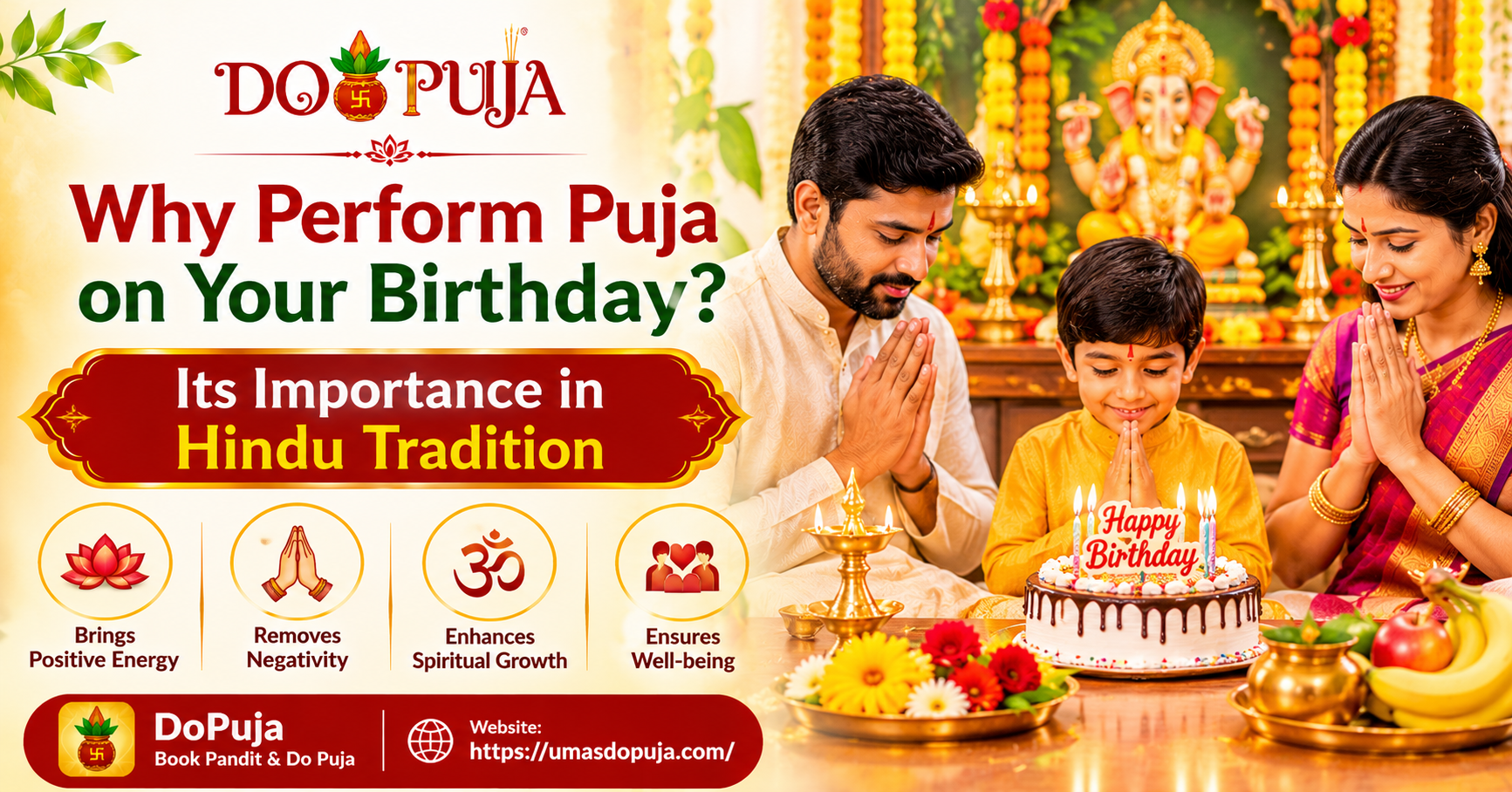
Why Perform Puja on Your Birthday? Discover the Significance of These Hindu Rituals!
A birthday is more than just cakes and celebrations! Hindu traditions give special importance to birthday pujas such as Janma Nakshatra Puja, Ayushya Homam, and Ganapati Puja. Discover why these rituals are performed, how to perform a simple birthday puja at home, and how to explore pandit booking services through DoPuja.
 DoPuja services
Why Do Hindus Perform Puja Before Engagement? Discover Its Significance!
Why do Hindu families perform puja before an engagement? Explore the spiritual significance of Engagement Puja, Ganapati Puja, traditional rituals, required puja items, and the importance of seeking a pandit's guidance. Discover how DoPuja can help you explore pandit booking options for your special occasion.
 DoPuja services
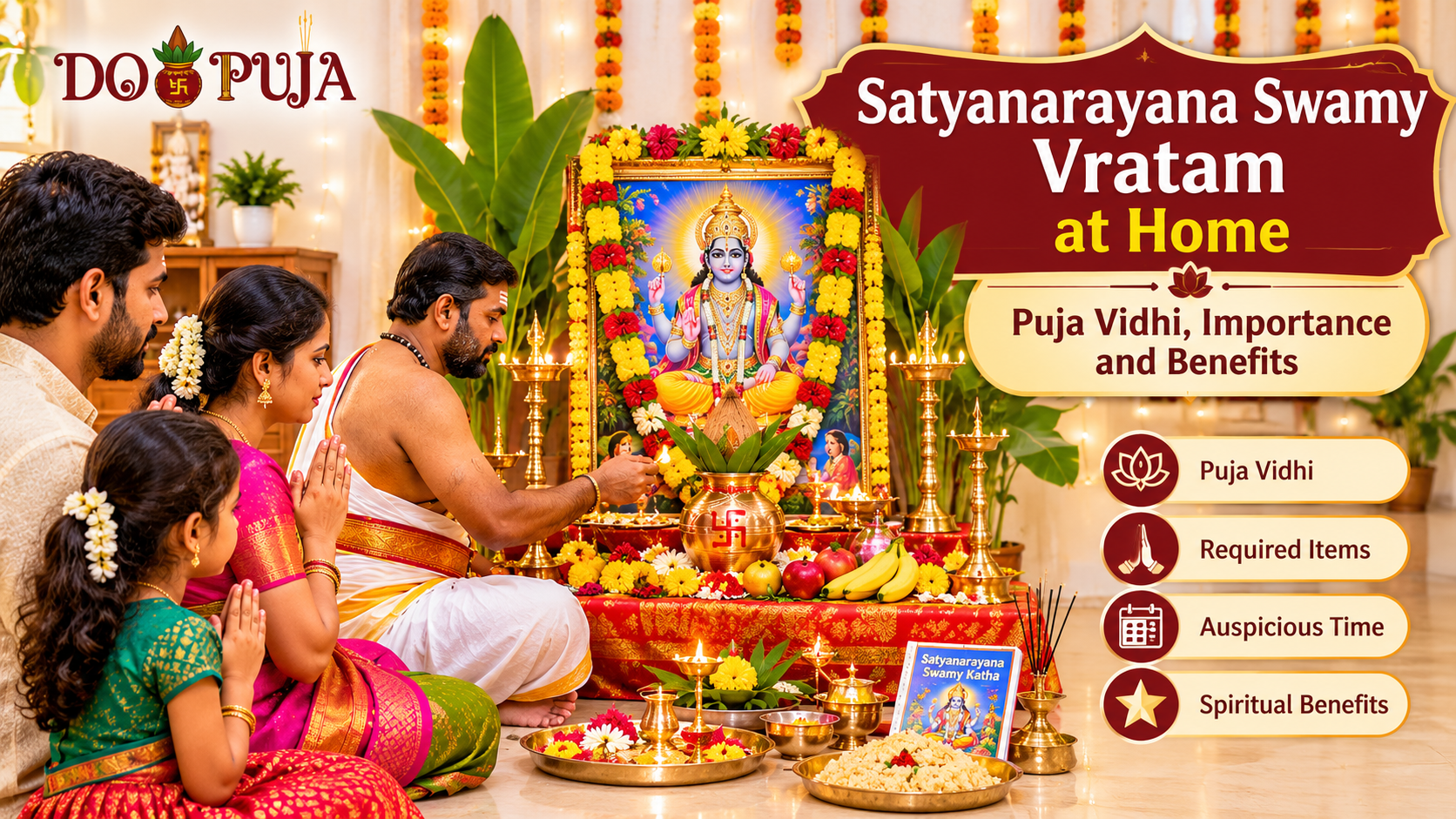
How to Perform Satyanarayana Swamy Vratam at Home? | DoPuja
Learn how to perform Satyanarayana Swamy Vratam at home with this simple guide. Explore the puja vidhi, required puja materials, Satyanarayana Vrat Katha, prasadam preparation, and spiritual significance. Discover how to book an experienced pandit for Satyanarayana Swamy Puja through Do Puja.
Comments
Be the first to comment.